

Ph.D. Admissions Open 2026            |            Admissions Open 2026-27      
School of Arts & Science

Computer Applications

Programme Overview

Department of Computer Applications

The Department of Computer Applications offers undergraduate and postgraduate programmes designed to develop technically competent, innovative, ethical, and socially responsible computing professionals.

BCA Programme

The Bachelor of Computer Applications programme focuses on building strong foundations in computer applications, programming, emerging technologies, and data sciences. It develops students’ Technical, Analytical, Problem-Solving, Communication, and Entrepreneurial Skills, preparing them for diverse careers in the IT sector and for continuous professional development.

The programme also emphasizes research, artificial intelligence, cybersecurity, software development, practical projects, industry interaction, and community-oriented digital solutions.

MCA Programme

The Master of Computer Applications programme provides advanced education in computing, integrating Advanced Computing Concepts, Emerging Technologies, Data Science, Artificial Intelligence, Cybersecurity, Cloud Computing, and Domain Knowledge.

It aims to produce expert software professionals and innovative technocrats with advanced analytical, programming, project management, and research capabilities. The programme emphasizes real-world applications, industry collaboration, entrepreneurship, ethical practices, and lifelong learning.

Vision and Mission

UG Vision

Vision

To stand as a dynamic center of excellence in computer applications, inspiring innovative technologists, analytical thinkers, and ethical digital professionals who harness computing power to drive technological advancement, efficiency, and positive societal transformation.
UG Mission

Mission

01

To offer inclusive, adaptable, and interdisciplinary undergraduate programs in computer applications that combine core computing principles with emerging technologies, programming, and data sciences, building graduates equipped with robust technical, problem-solving, and communication skills for diverse career paths and ongoing professional development.

02

To advance cutting-edge research and creative inquiry in software development, digital solutions, artificial intelligence, and cybersecurity, tackling key challenges in industry, healthcare, education, and community services.

03

To broaden access to quality computing education for rural and underrepresented students by merging contemporary IT skills with local needs, preserving traditional knowledge through digital tools, and cultivating entrepreneurial abilities for self-reliant career growth.

04

To nurture ethical practices, social responsibility, and global outlook via hands-on projects, industry linkages, community initiatives, and experiential learning that connect theoretical concepts with practical real-world computing applications.

PG Vision

Vision

To emerge as a distinguished leader in advanced computing education, nurturing expert software professionals, visionary innovators, and responsible technocrats who leverage cutting-edge technologies to solve complex problems and foster digital empowerment across society.

PG Mission

Mission

01

To deliver inclusive, flexible, and interdisciplinary postgraduate programs in computer applications that integrate advanced computing concepts, emerging technologies, and domain knowledge, equipping graduates with superior analytical, programming, and project management skills for multifaceted careers and lifelong learning.

02

To promote high-quality research and innovation in software engineering, data science, artificial intelligence, cybersecurity, and cloud computing, addressing real-world challenges in industry, governance, healthcare, and education sectors.

03

To expand access to advanced computing education for rural and marginalized students by blending modern IT expertise with local requirements, preserving cultural knowledge through digital platforms, and developing entrepreneurial competencies for self-sustaining professional growth.

04

To instill strong ethical standards, social commitment, and global perspective through practical projects, industry collaborations, community engagements, and experiential learning that effectively bridge advanced theory with impactful real-world computing solutions.

PO, PSO, PEO

Programme Educational Objectives

PEOs

PEO1

Programming & Computing Foundation

To impart a strong foundation in programming, database management, software engineering, networking, and web technologies, enabling graduates to pursue rewarding careers in IT industry, software development, and allied sectors.

PEO2

Logical Thinking & Software Development

To cultivate logical thinking, analytical abilities, and technical proficiency so that graduates can design, develop, test, and maintain efficient software solutions and computer applications for real-life problems.

PEO3

Professional Ethics & Leadership

To develop professional ethics, teamwork, communication skills and leadership qualities that prepares graduates to work collaboratively in multidisciplinary environments and contribute responsibly to the IT ecosystem.

PEO4

Continuous Learning & Career Development

To encourage continuous learning and adaptability, empowering graduates to keep pace with rapid technological changes and explore higher studies, research, or entrepreneurial opportunities in computer applications.

Programme Specific Outcomes

PSOs

PSO1

Programming & Application Development

Graduates will be capable of applying core concepts of programming, algorithms, data structures, and software development methodologies to create robust, user-friendly applications and digital solutions.

PSO2

Emerging Technologies & Digital Solutions

Graduates will demonstrate expertise in database handling, web and mobile application development, cyber security basics, and emerging tools, enabling them to contribute effectively to the IT industry, digital entrepreneurship, and community technology projects.

Programme Outcomes

POs

PO1

Disciplinary Knowledge

Demonstrate comprehensive knowledge and understanding of the fundamental concepts, theories, principles, and applications in the chosen discipline and allied fields.

PO2

Critical Thinking and Problem Solving

Identify, analyze, and solve complex academic, professional, and societal problems using logical reasoning, analytical skills, and evidence-based approaches.

PO3

Research and Inquiry

Apply scientific methods, research techniques, and investigative skills to conduct studies, analyze data, interpret results, and draw meaningful conclusions.

PO4

Creativity and Innovation

Develop innovative ideas, creative solutions, and entrepreneurial approaches to address contemporary challenges in academic, professional, and social contexts.

PO5

Digital and Technological Competence

Utilize appropriate digital technologies, software tools, and information resources effectively and ethically for learning, research, communication, and problem-solving.

PO6

Environment and Sustainability

Understand environmental issues and sustainable development goals and apply this knowledge to promote ecological balance and responsible resource utilization.

PO7

Ethics and Social Responsibility

Demonstrate ethical values, integrity, inclusiveness, and social responsibility while contributing positively to society and professional environments.

PO8

Teamwork and Leadership

Work effectively as an individual and as a member or leader of diverse and multidisciplinary teams, demonstrating leadership, collaboration, and interpersonal skills.

PO9

Communication Skills

Communicate effectively through oral, written, visual, and digital means with diverse audiences in academic, professional, and societal settings.

PO10

Employability and Entrepreneurship

Develop professional competencies, managerial abilities, and entrepreneurial skills required for employment, higher education, and self-employment opportunities.

PO11

Lifelong Learning

Recognize the need for continuous learning, adaptability, and self-development to meet evolving personal, professional, and societal demands in a dynamic global environment.

Programme Educational Objectives

PEOs

PEO1

Advanced Computing & Professional Leadership

To provide graduates with an in-depth understanding of advanced computer applications, software architecture, database systems, networking, and modern development frameworks, preparing them for leadership roles in IT industry, research organizations, and academia.

PEO2

Advanced Problem Solving & Research

To enhance problem-solving, critical analysis, and research capabilities so that graduates can independently design, develop, implement, and evaluate sophisticated software systems and applications for complex real-life scenarios.

PEO3

Professional Ethics & Leadership

To cultivate professional ethics, effective communication, teamwork, and leadership skills that enable graduates to excel in multidisciplinary teams and contribute responsibly to technological and societal development.

PEO4

Continuous Learning & Innovation

To foster a culture of continuous learning and adaptability, empowering graduates to stay abreast of rapid technological advancements and pursue research, higher studies, innovation, or entrepreneurial initiatives in computer applications.

Programme Specific Outcomes

PSOs

PSO1

Advanced Software Development

Graduates will be proficient in applying advanced algorithms, software engineering principles, full-stack development, and emerging technologies to build scalable, secure, and efficient software solutions and applications.

PSO2

Data Analytics & Emerging Technologies

Graduates will demonstrate expertise in data analytics, artificial intelligence techniques, project management, and ethical computing practices, enabling them to contribute meaningfully to the IT industry, research projects, and technology-driven community initiatives.

Programme Outcomes

POs

PO1

Computational Knowledge

Apply knowledge of computing fundamentals, mathematical foundations, and domain-specific concepts to develop computing solutions for complex problems.

PO2

Problem Analysis

Identify, formulate, analyze, and solve complex computing problems using principles of mathematics, computer science, and relevant disciplines.

PO3

Design and Development of Solutions

Design, develop, and evaluate computing systems, software, and processes that meet specified requirements while considering societal, environmental, and safety aspects.

PO4

Investigation of Complex Problems

Conduct investigations using research methodologies, experimentation, data analysis, and interpretation to derive valid conclusions for computing problems.

PO5

Modern Tool Usage

Select, adapt, and apply appropriate modern computing tools, technologies, and techniques for designing and implementing effective solutions.

PO6

Professional Ethics

Demonstrate professional ethics, integrity, cyber responsibility, and adherence to legal and ethical standards in computing practice.

PO7

Individual and Team Work

Function effectively as an individual and as a member or leader in multidisciplinary teams to accomplish shared goals.

PO8

Communication Skills

Communicate effectively through technical reports, documentation, presentations, and interpersonal interactions with professional and societal stakeholders.

PO9

Project Management and Leadership

Apply project management principles, financial considerations, and leadership skills to manage computing projects in multidisciplinary environments.

PO10

Societal and Environmental Responsibility

Assess and address societal, environmental, health, safety, legal, and cultural issues associated with computing solutions and professional practice.

PO11

Life-long Learning

Recognize the need for continuous learning and engage in independent professional development to adapt to emerging technologies and evolving industry demands.

Board of Studies

01

Dr. M. Durairaj

Associate Professor
Department / Institution

School of Computer Science, Engineering and Applications, Bharathidasan University, Tiruchirapalli.

02

Dr. S. KANCHANA

Associate Professor
Department / Institution

Department of Computer Science, SRM Institute of Science and Technology, Kattankulathur.

Curriculum and Syllabus

UG Curriculum & Syllabus

BCA - Bachelor of Computer Applications

Curriculum and syllabus document for the undergraduate programme in Computer Applications.

View PDF
PG Curriculum & Syllabus

MCA - Master of Computer Applications

Curriculum and syllabus document for the postgraduate programme in Computer Applications.

View PDF

Laboratory and Learning Resources

COMPUTER LAB 01

INFO PARK

Info Park is a dedicated computer laboratory providing students with a practical and technology-oriented environment for programming, software development, artificial intelligence, machine learning, and mobile application development.

The laboratory is equipped with modern computer systems and high-speed internet connectivity, enabling students to gain hands-on experience with programming languages, development environments, and emerging computing technologies.

84 Total No. of Computers
80 Internet Connected Systems
200 Mbps Internet Speed
System Information

Info Park Computer Configuration

Device Configuration

HP Computer Systems

Installed RAM 16 GB
Processor Intel(R) Core(TM) i3-4130 CPU @ 3.40GHz
Operating System 64-bit
Internet Connectivity 80 Systems Connected
Software Details

Programming & Technology Software

01 Artificial Intelligence & Machine Learning IDLE / VS Code
02 Android Android Studio
03 Python IDLE / VS Code
04 Java Java
05 C Turbo C
COMPUTER LAB 02

NET PARK

Net Park provides a focused computing environment for practical programming and software development activities. The laboratory supports students in developing technical skills through hands-on exposure to programming languages and development tools.

With dedicated computer systems and high-speed internet connectivity, the laboratory enables students to practice programming concepts, application development, and technology-oriented academic activities.

40 Total No. of Computers
38 Internet Connected Systems
200 Mbps Internet Speed
System Information

Net Park Computer Configuration

Device Configuration

HP Computer Systems

Installed RAM 16 GB
Processor Intel(R) Core(TM) i5-8500T CPU @ 2.10GHz
Operating System 64-bit
Internet Connectivity 38 Systems Connected
Software Details

Programming Software

01 Python IDLE / VS Code
02 Java Java
03 C Turbo C

Faculty Corner

Faculty Development

FDP

01

Ms. D. Janaki has successfully completed Faculty Development Programme (FDP) on “AI Horizons: Foundations, Vision and Intelligent IoT Applications” organized by Department of Information Technology, Dhanalakshmi Srinivasan Engineering College (Autonomous), in Virtual mode from 29th June 2026 to 03rd July 2026.

02

Ms. D. Janaki has successfully completed Faculty Development Programme (FDP) on “Shaping Secure Digital Futures through Cybersecurity” organized by Dhanalakshmi Srinivasan Engineering College (Autonomous), in Virtual mode from 06th to 10th July 2026.

03

Ms. D. Janaki and Ms. D. Indumathi have successfully completed Faculty Development Programme (FDP) on “Quantum Computing for Modern Computational Domains” organized by Periyar Maniammai Institute of Science and Technology, Vallam, Thanjavur, Tamil Nadu, India, in Virtual mode from 08th to 13th Dec 2026.

Academic Contributions

Book Publications

01

Dr. M. Kamarunisha published a book chapter titled “The Digital Nexus: Convergence of Computing, Connectivity, and Data” in the book EDGE AI FOR SMART CITIES.

02

Dr. M. Kamarunisha published a book chapter titled “AI-Powered Digital Transformation: Bridging Computer Science and Life Sciences” .

03

Dr. M. Kamarunisha published a book chapter titled “SPARSE TRANSFORMER ARCHITECTURES FOR EFFICIENT DEEP LEARNING” .

04

Dr. M. Kamarunisha published a book chapter titled “BATTERY-LESS IOT DEVICES: ENABLING PERPETUAL 6G SENSING NETWORKS” .

05

Dr. M. Kamarunisha published a book chapter titled “EDGE AI FOR SMART CITIES” .

06

Dr. M. Kamarunisha published a book chapter titled “Ai-Powered Digital Transformation: Bridging Computer Science and Life Sciences” .

07

Dr. M. Kamarunisha published a book chapter titled “DATASET BENCHMARKING AND PERFORMANCE EVALUATION METRICS” .

08

Ms. S. Dhara published a book chapter titled “DESIGN AND DEVELOPMENT OF MORTAL IDENTIFICATION AND HANDICAP DISCOVERY SYSTEM FOR EYELESS USING MACHINE KNOWLEDGE” .

09

Ms. S. Dhara published a book chapter titled “MODERN IMAGE AND VIDEO PROCESSING: A STEP BEYOND PIXELS” .

10

Ms. S. Dhara published a book chapter titled “Efficient Attack Detection in WSN Using Long-Short Term Memory and Convolutional Neural Networks” .

11

Ms. S. DurgaDevi published a book chapter titled “DESIGN AND IMPLEMENTATION OF AN AI-DRIVEN SYSTEM FOR HUMAN RECOGNITION AND DISABILITY DETECTION IN THE VISUALLY IMPAIRED” .

12

Ms. D. Janaki published a book chapter titled “Dataset Benchmarking and performance Evaluation Metrics” from the book “Futuristic Trends in Image & Video Processing Volume 6S1 Book 2” .

13

Ms. D. Janaki published a book chapter titled “Energy – Efficient Communication Protocols for IOT-Based Electrical Systems” .

14

Ms. D. Janaki published a book chapter titled “Smart Healthcare and IoT: Enhancing Patient Care through connected Intelligence.” .

15

Ms. S. Durga Devi published a book chapter titled “DESIGN AND IMPLEMENTATION OF AN AI-DRIVEN SYSTEM FOR HUMAN RECOGNITION AND DISABILITY DETECTION IN THE VISUALLY IMPAIRED” .

16

Ms. S. Durga Devi published a book chapter titled “DESIGN AND IMPLEMENTATION OF AN AI-DRIVEN SYSTEM FOR HUMAN RECOGNITION AND DISABILITY DETECTION IN THE VISUALLY IMPAIRED” .

Research

Journal Publications

01

Dr. M. Kamarunisha published a Journal of Advance and Future Research titled “ENERGY-EFFICIENT DATA TRANSMISSION IN UNDERWATER SENSOR NETWORKS USING AI-DRIVEN ROUTING PROTOCOLS” .

02

Dr. M. Kamarunisha published a Journal of Advance and Future Research (JAAFR) titled “ENERGY-EFFICIENT DATA TRANSMISSION IN UNDERWATER SENSOR NETWORKS USING AI-DRIVEN ROUTING PROTOCOLS” .

03

Dr. M. Kamarunisha and Ms. S. Dhara published a Optical Technique Journal titled “Efficient Attack Detection in WSN Using Long-Short Term Memory and Convolutional Neural Networks” .

Academic Development

International Seminar

01

Dr. M. Kamarunisha has completed a One-day International Seminar (Online) titled “Research - Driven Generative AI, Computer Vision, and Interactive Machine Learning Revolution” .

Student's Corner

Student Achievement

Journal Publications

Participant

H. Ratchana

Achievement

Certificate of Publication

Title

ENERGY-EFFICIENT DATA TRANSMISSION IN UNDERWATER SENSOR NETWORKS USING AI-DRIVEN ROUTING PROTOCOLS

Organization

Journal of Advance and Future Research

Publication Details

Volume 4 Issue 7, July-2026

Certificate ID

JAAFR2607264 / Registration ID 512406

Participant

S. Sarubala

Achievement

Certificate of Publication

Title

ENERGY-EFFICIENT DATA TRANSMISSION IN UNDERWATER SENSOR NETWORKS USING AI-DRIVEN ROUTING PROTOCOLS

Organization

Journal of Advance and Future Research

Publication Details

Volume 4 Issue 7, July-2026

Certificate ID

JAAFR2607264 / Registration ID 512406

Student Achievement

International Conference Participation

Participants

P. Swetha, D. Divyadharshini, J. Varsha, S. Tharahni, S. Kaniga, K. R. Harshini, K. Arthi, A. Preethi, S. Sugavathi, K. Kalpana, K. Jeevitha, A. Sivasakthi, N. Nithyasri and G. Kiruthika

Conference

AICTE – Vibrant Advocacy for Advancement and Nurturing of Indian Languages (VAANI)

Organization

AICTE in association with Thanthai Hans Roever College, Perambalur

Title / Theme

Smart Cities and Intelligent Mobility for Sustainable Digital India

Participation Date

20.08.2026 to 21.08.2026

Certificate IDs

ATAL / 2026 / 1786889497
ATAL / 2026 / 1786972953
ATAL / 2026 / 1786974011
ATAL / 2026 / 1786888354
ATAL / 2026 / 1786973200
ATAL / 2026 / 1786972666
ATAL / 2026 / 1786890865
ATAL / 2026 / 1786976640
ATAL / 2026 / 1786890568
ATAL / 2026 / 1786891178
ATAL / 2026 / 1786888553
ATAL / 2026 / 1786973702
ATAL / 2026 / 1786973455
ATAL / 2026 / 1786889120

Student Achievement

Published Book Chapters

Participant

R. Abinaya

Book Chapter

Energy – Efficient Communication Protocols for IOT-Based Electrical Systems

Participant

V. Kaviya

Book Chapter

Sparse Transformer Architectures for Efficient Deep Learning

Participant

S. Varsha

Book Chapter

Hidden MARKOV Model

Participant

S. Aparna

Book Chapter

Sparse Transformer Architectures for Efficient Deep Learning

Participant

S. Abinaya

Book Chapter

Privacy – Aware Federated Compliance Framework

Participant

P. Nandhini

Book Chapter

Privacy – Aware Federated Compliance Framework

Participant

M. Malini

Book Chapter

Privacy-Preserving Machine Learning in the Healthcare using Blockchain and Analytic Gaussian Mechanism

Participant

V. Nisha

Book Chapter

Design and Implementation of an AI-Driven System for Human Recognition and Disability Detection in the Visually Impaired

Participant

G. Abi

Book Chapter

Privacy-Preserving Machine Learning in the Healthcare using Blockchain and Analytic Gaussian Mechanism

Participant

S. Krishnaveni

Book Chapter

Energy – Efficient Communication Protocols for IOT-Based Electrical Systems

Participant

T. Rajeswari

Book Chapter

Privacy – Aware Federated Compliance Framework

Organization

Iterative International Publishers - IIP

Publication Date

06.04.2026

ISBN

978-93-7020-231-3

Event Corner

18 AUG 2026
Event 03

Seminar AI Meet

Department of Computer Applications

AI Meet

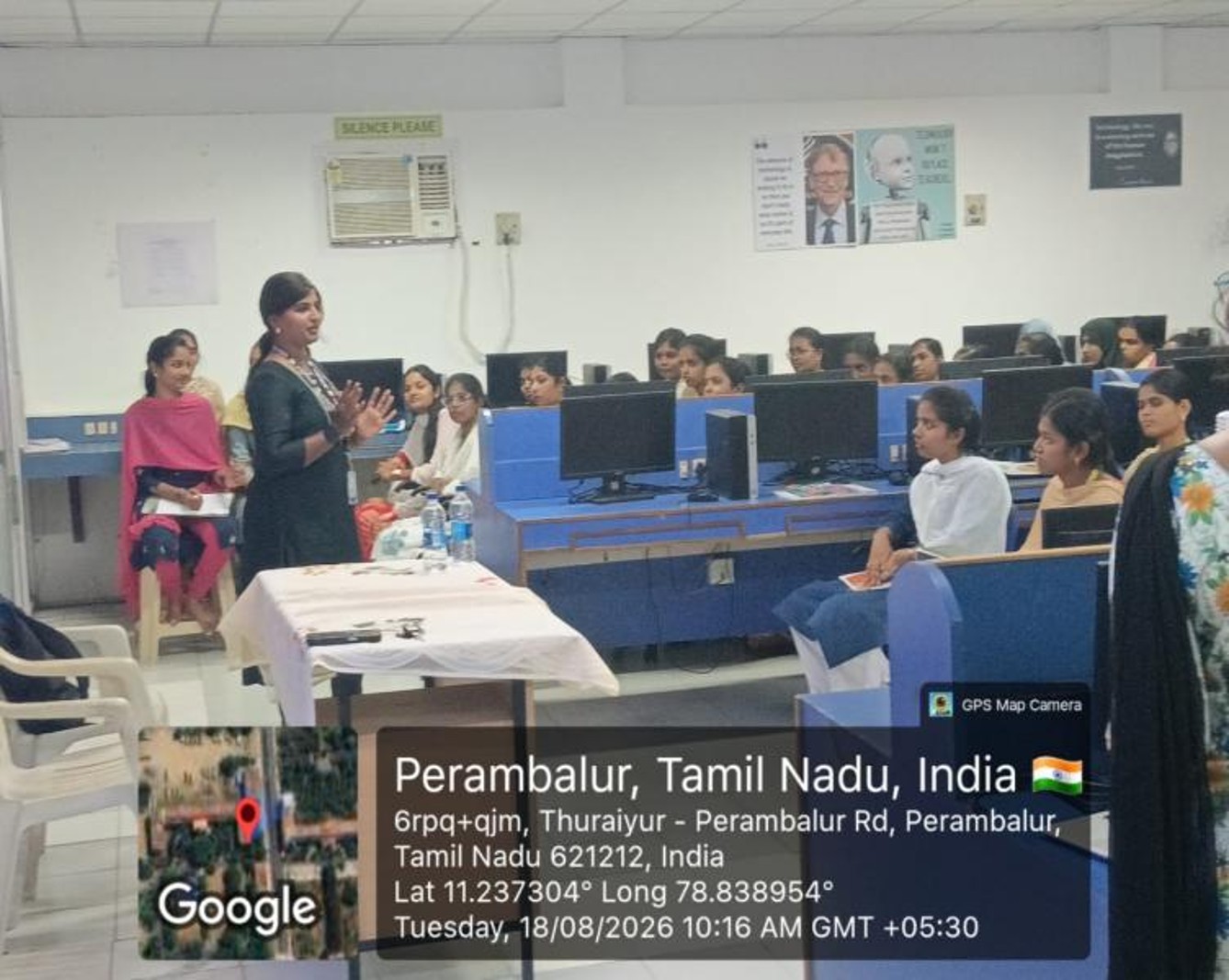
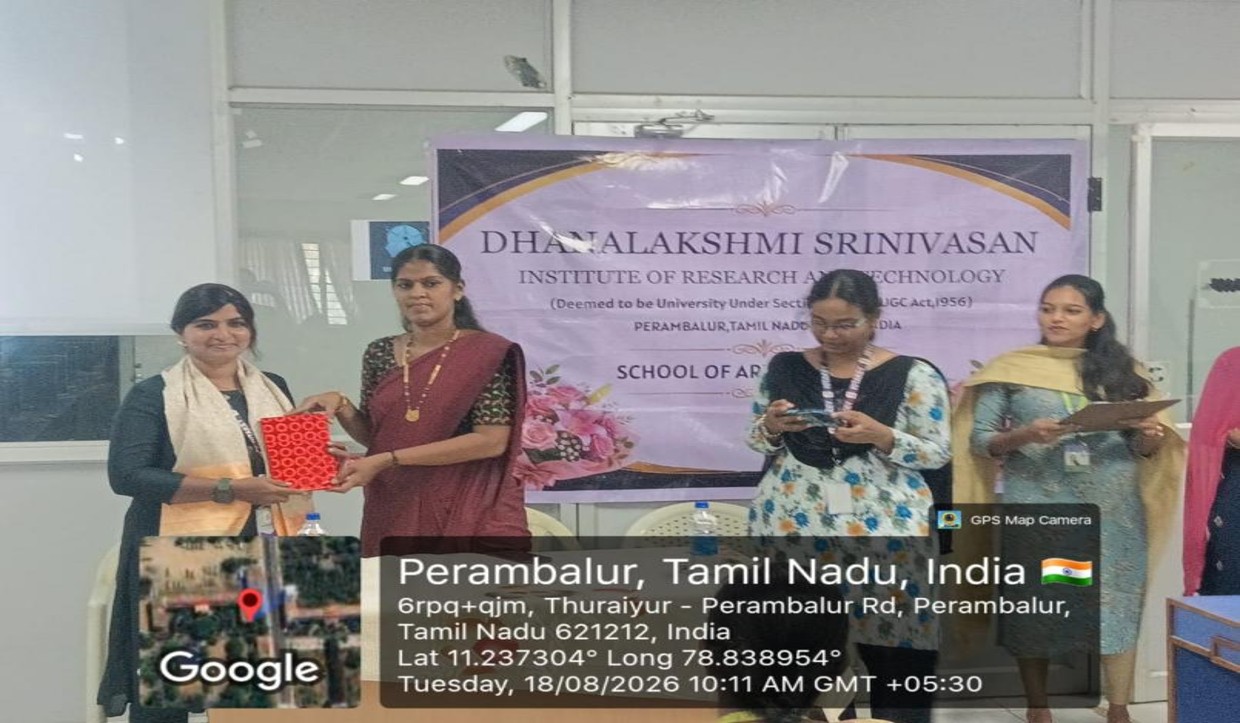
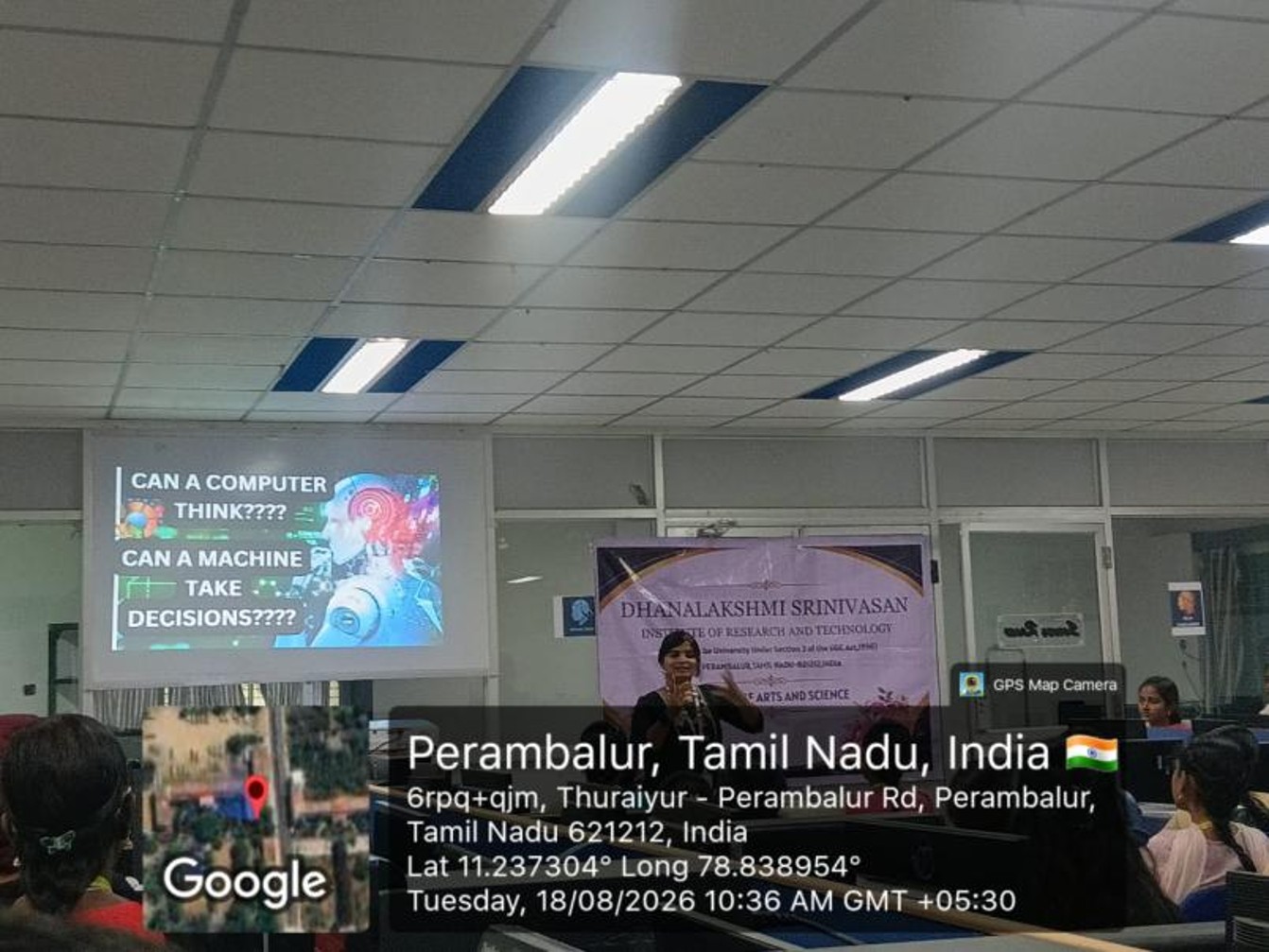
The Department of Computer Applications organized a seminar AI Meet on the topic “The Future of Intelligent Analytics” on 18 August 2026.

Resource Person Ms. Salomjerlin
Date 18.08.2026
14 JUL 2026
Event 02

Three-Day Department Induction Programme

Department of Computer Applications

Department Induction

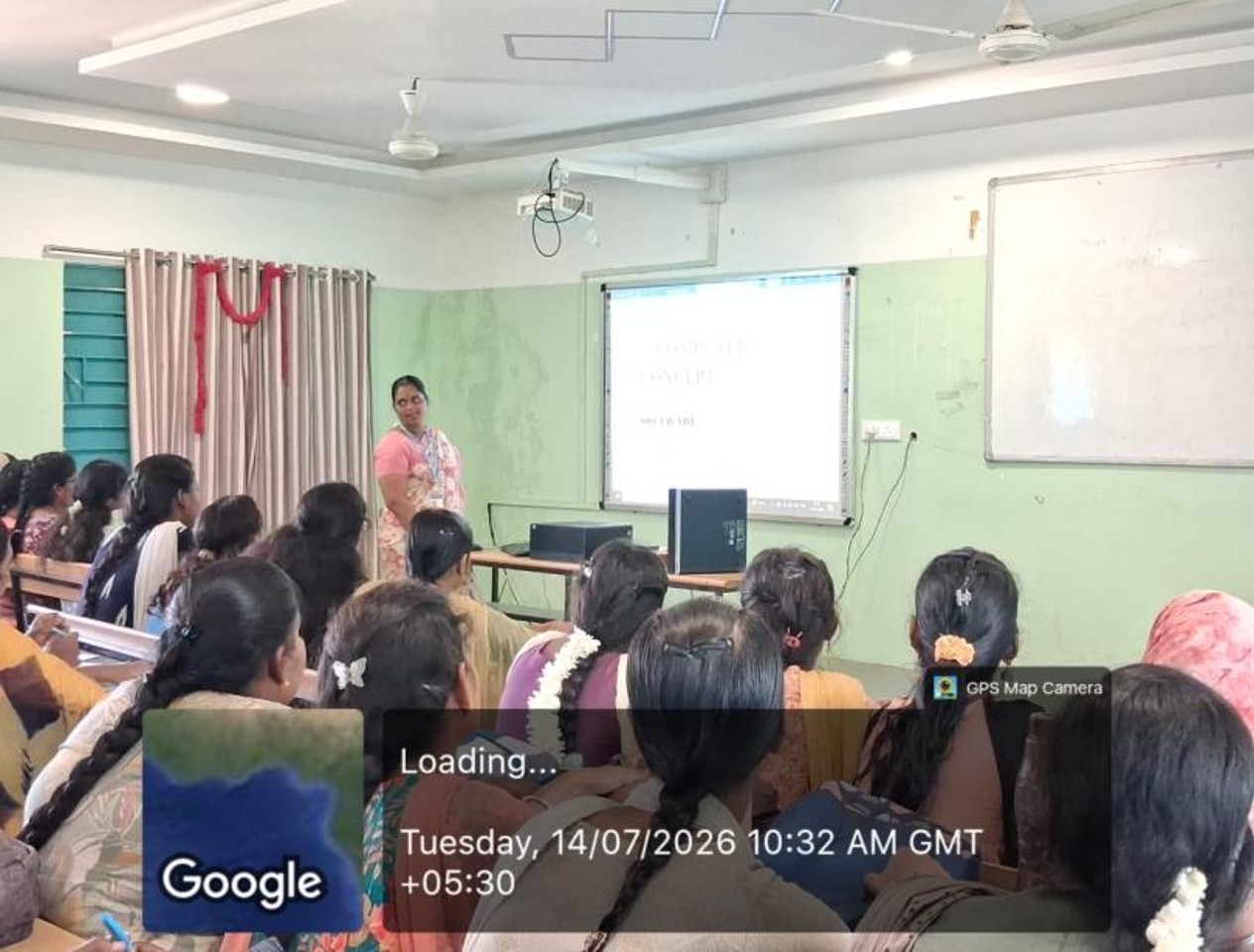
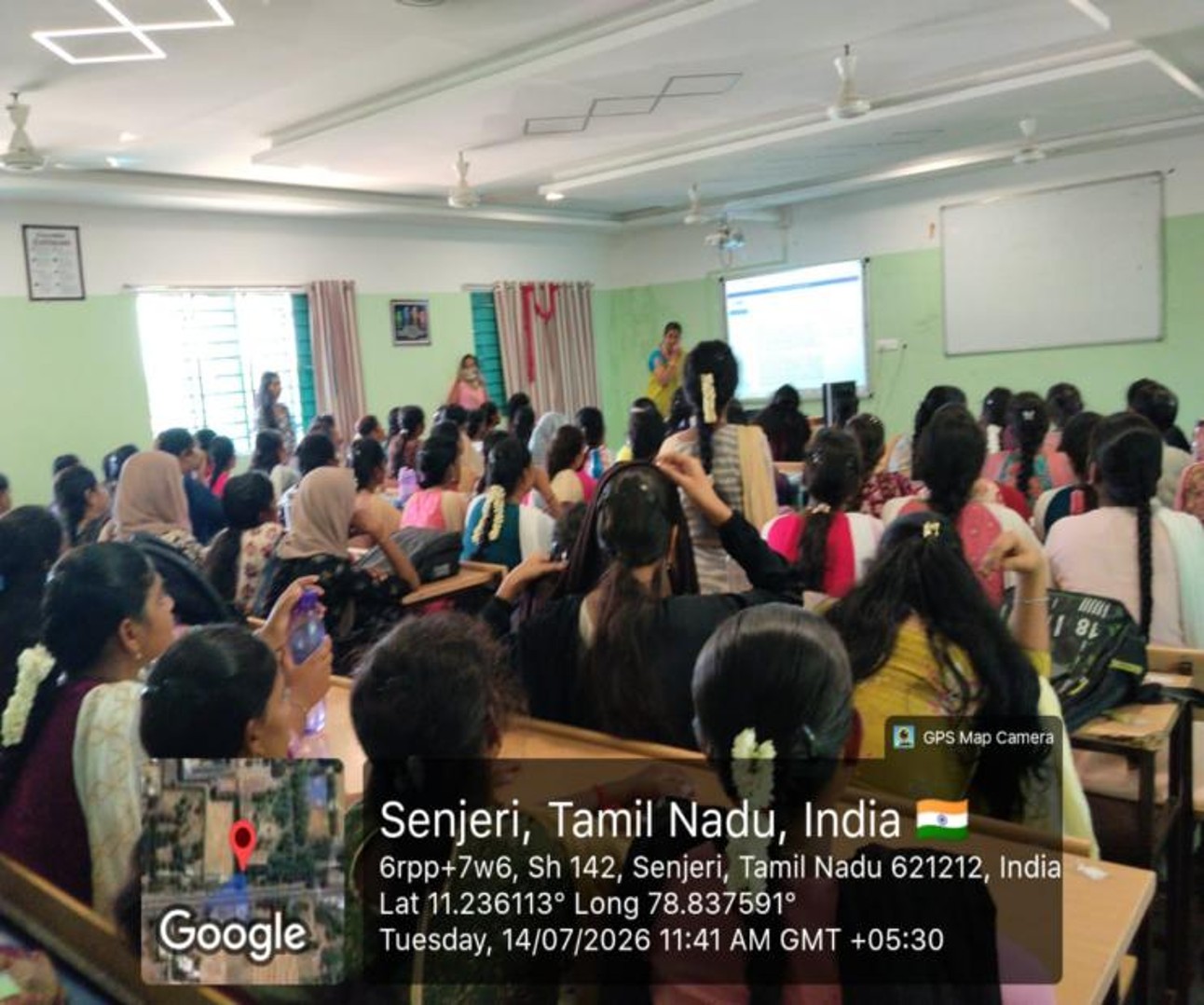
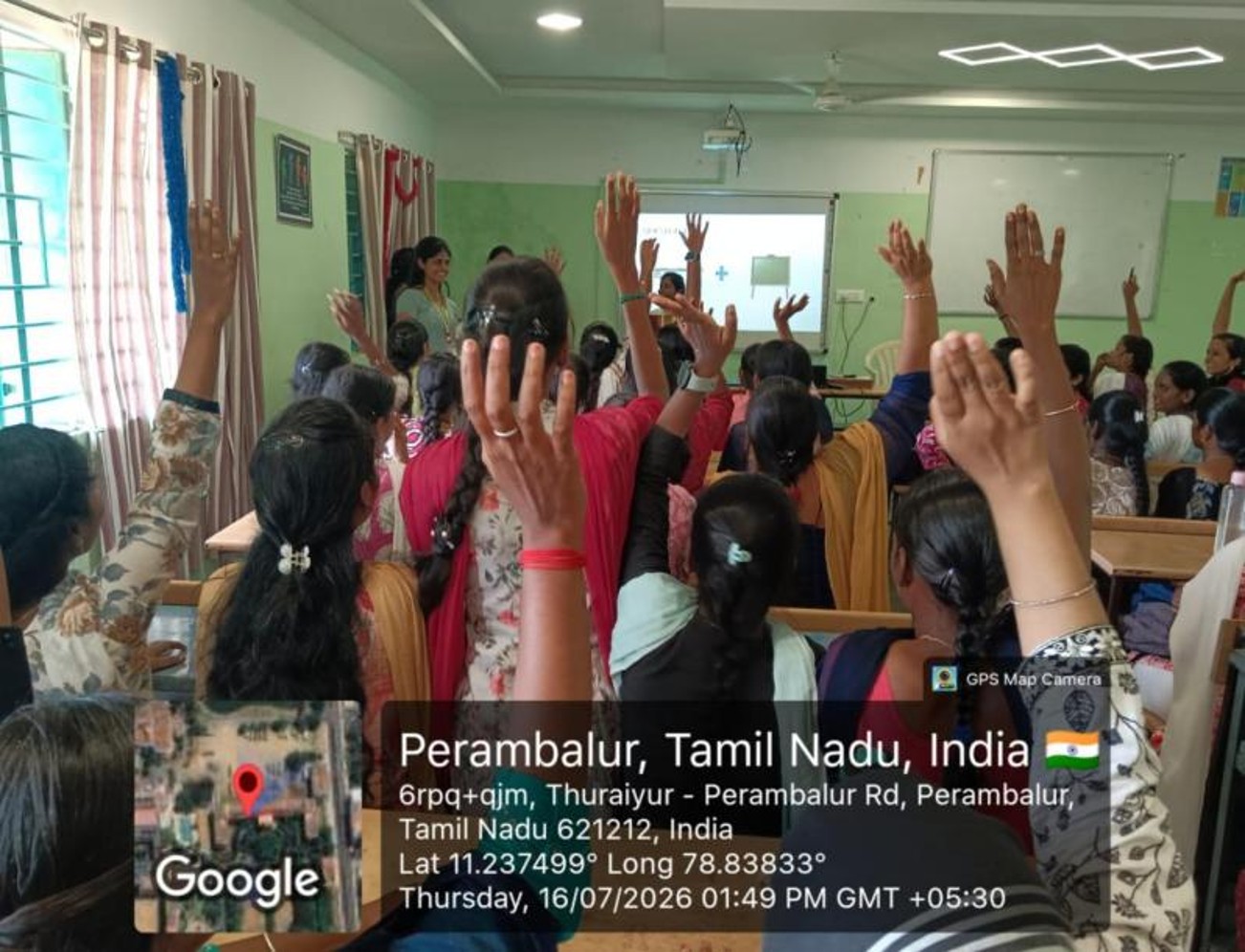
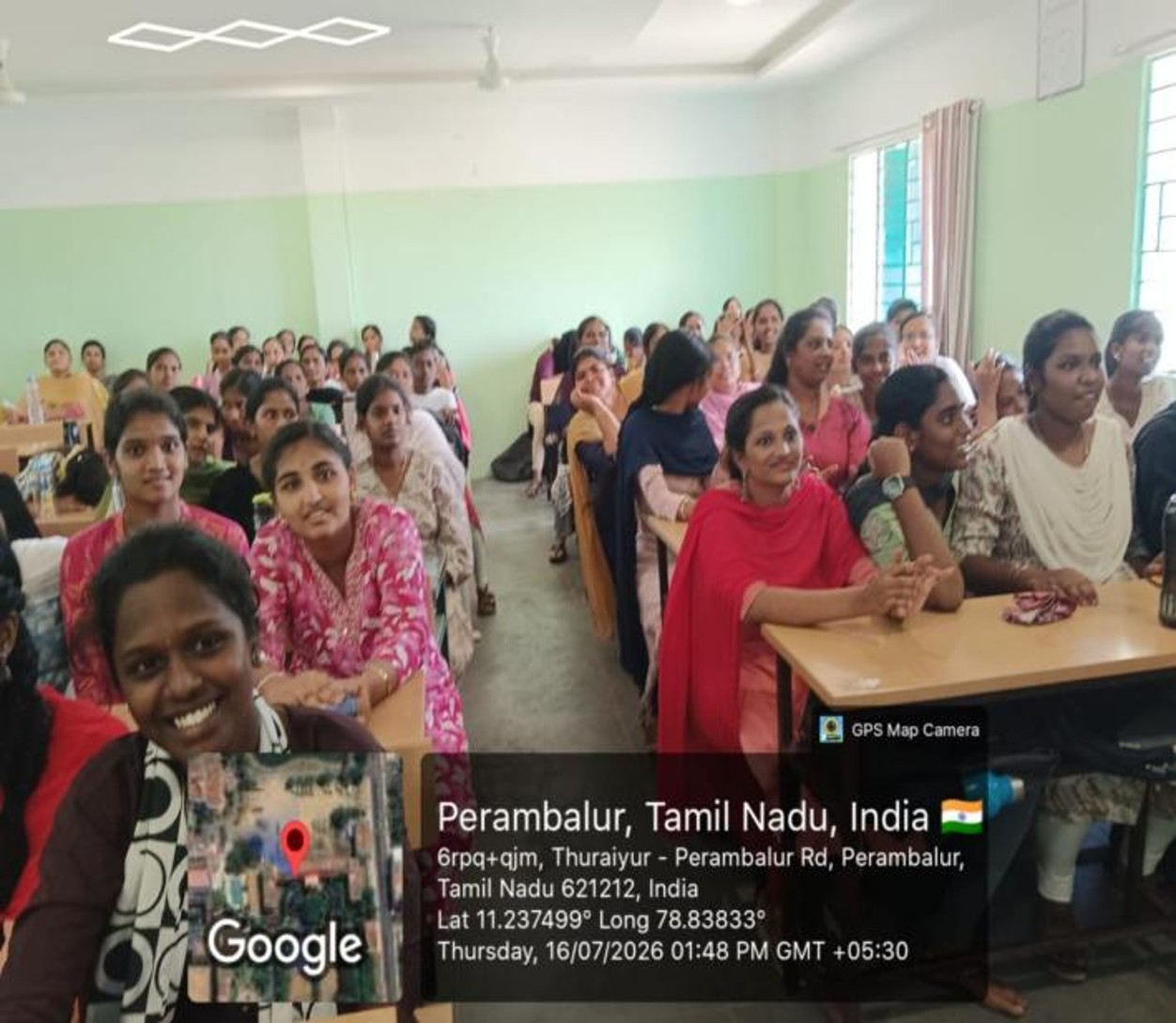
The Department of Computer Applications organized a Three-Day Department Induction Programme from 14 July 2026 to 16 July 2026, providing students with academic orientation, departmental guidance, industry exposure, and practical insights.

Day 1 Dr. S. Arthi, HOD/DSEC
Day 2 Dr. M. Kamarunisha, HOD
Day 3 Mr. M. Faizal Ahamed, Director, Trionix, Puthukottai
Mr. D. Ajay, Senior Developer, Trionix, Puthukottai
Ms. R. Arunapriya
Date 14.07.2026 to 16.07.2026
10 AUG 2026
Event 01

Inauguration of AI IGNITE Club Followed by Hands-on Training on AI Tools for Prompt Engineering

Department of Computer Applications

AI IGNITE Club

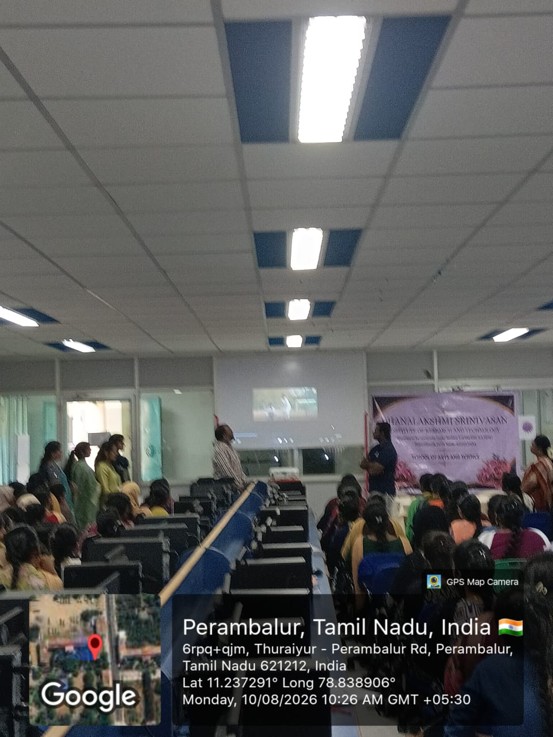
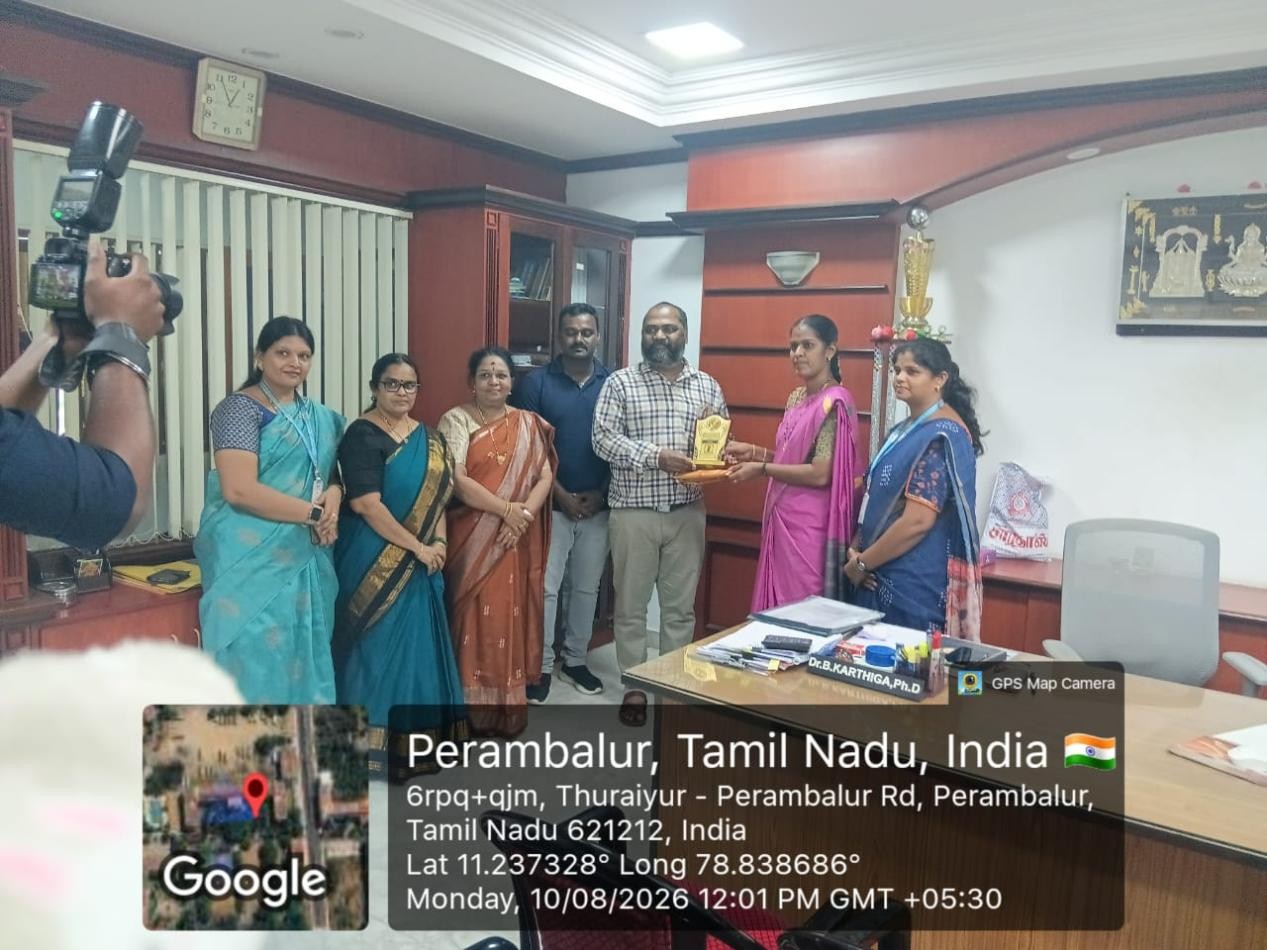
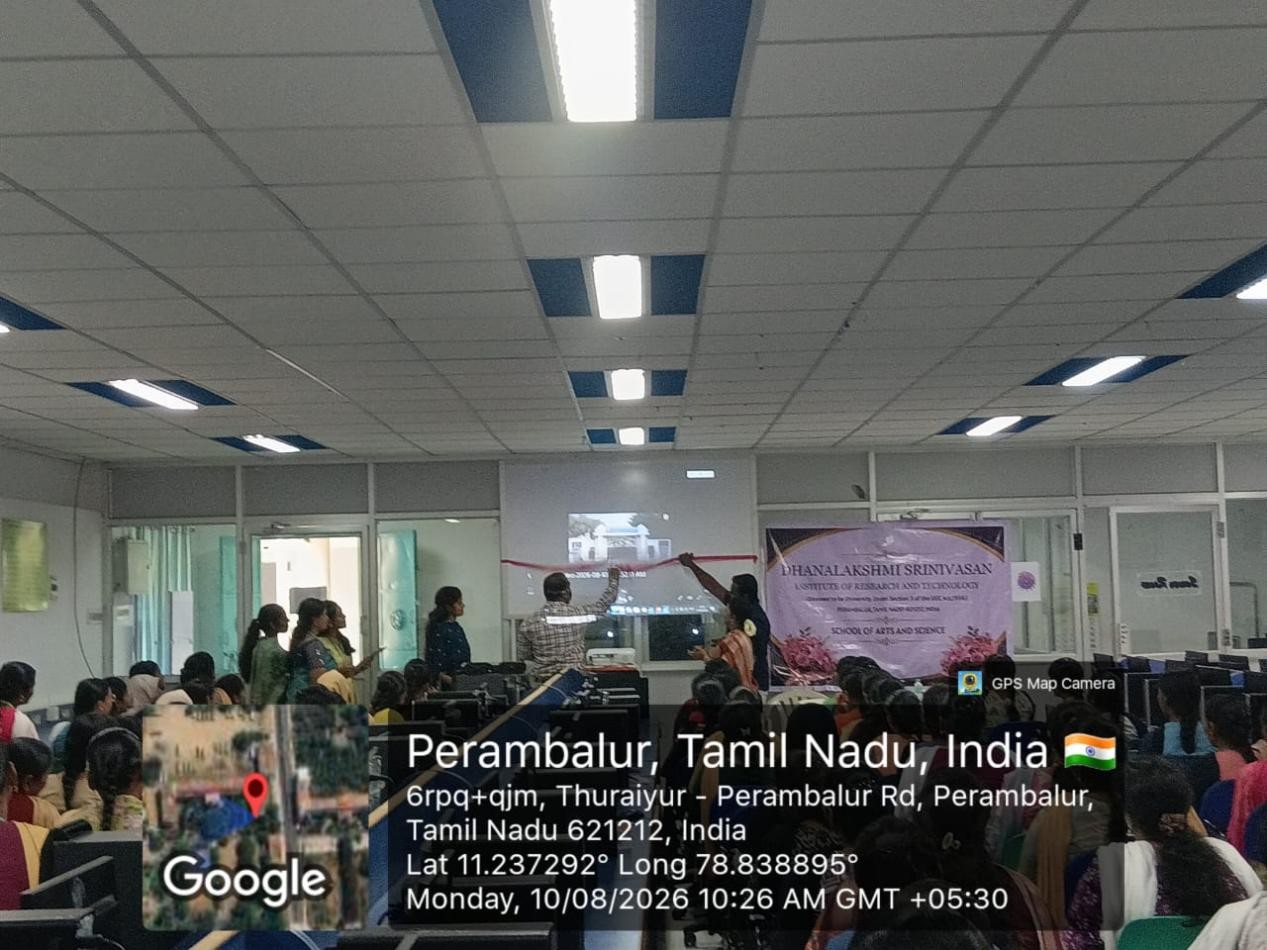
The Department of Computer Applications organized the Inauguration of AI IGNITE Club followed by hands-on training on AI Tools for Prompt Engineering on 10 August 2026.

Resource Person Mr. Alagupandi Selvaraj, R&D Team Lead, United Soft Tech, Salem
Date 10.08.2026

Alumni Testimonial

Mukila Pooja M
Department of Computer Applications

MUKILA POOJA M

SOFTWARE ENGINEER ANALYST

Batch 2022-2024
Company ACCENTURE
Feedback

Aarthi T
Department of Computer Applications

AARTHI T

JR. EXECUTIVE

Batch 2023-2025
Company INFLUX ONE
Feedback

Dhivya R
Department of Computer Applications

DHIVYA R

PROCESS EXECUTIVE

Batch 2023-2025
Company COGNIZANT
Feedback