

Ph.D. Admissions Open 2026            |            Admissions Open 2026-27      
School of Arts & Science

Artificial Intelligence and Machine Learning

Programme Overview

The Department of Artificial Intelligence and Machine Learning offers undergraduate programmes designed to develop technically competent, innovative, ethical, and socially responsible professionals in the field of Artificial Intelligence and Machine Learning.

Undergraduate Programme

B.Sc. AI & ML Programme

The Bachelor of Science in Artificial Intelligence and Machine Learning programme focuses on building strong foundations in programming, mathematics, data science, artificial intelligence, and machine learning.

It develops students’ technical, analytical, problem-solving, communication, and entrepreneurial skills, preparing them for diverse careers in AI, machine learning, data analytics, software development, and emerging technology sectors.

The programme also emphasizes deep learning, natural language processing, computer vision, intelligent systems, practical projects, research, industry interaction, and innovation, enabling students to develop intelligent and socially responsible technology solutions.

Vision and Mission

Our Vision

Vision

To emerge as a forward-looking center of excellence in artificial intelligence and machine learning, nurturing talented young innovators, analytical thinkers, and ethical technologists who design intelligent systems to solve complex problems and drive responsible digital transformation for societal good.
Our Mission

Mission

01

To offer inclusive, flexible, and interdisciplinary undergraduate programs in artificial intelligence and machine learning that integrate foundational computing, algorithms, data science, and domain applications, equipping graduates with strong technical, analytical, and problem-solving skills for diverse career paths and lifelong learning.

02

To promote practical research and innovative inquiry in machine learning models, intelligent systems, data analytics, and AI applications, addressing key challenges in healthcare, agriculture, education, and industry.

03

To expand access to quality AI and ML education for rural and underprivileged students by combining modern computational tools with local needs, preserving cultural knowledge through digital intelligence, and building entrepreneurial competencies for self-reliant careers.

04

To cultivate ethical practices, social responsibility, and global awareness through hands-on projects, industry partnerships, community initiatives, and experiential learning that connects theoretical concepts with real-world intelligent applications.

PO, PSO & PEO

PO

Program Outcomes

PO1

Disciplinary Knowledge

Demonstrate comprehensive knowledge and understanding of the fundamental concepts, theories, principles, and applications in the chosen discipline and allied fields.

PO2

Critical Thinking and Problem Solving

Identify, analyze, and solve complex academic, professional, and societal problems using logical reasoning, analytical skills, and evidence-based approaches.

PO3

Research and Inquiry

Apply scientific methods, research techniques, and investigative skills to conduct studies, analyze data, interpret results, and draw meaningful conclusions.

PO4

Creativity and Innovation

Develop innovative ideas, creative solutions, and entrepreneurial approaches to address contemporary challenges in academic, professional, and social contexts.

PO5

Digital and Technological Competence

Utilize appropriate digital technologies, software tools, and information resources effectively and ethically for learning, research, communication, and problem-solving.

PO6

Environment and Sustainability

Understand environmental issues and sustainable development goals and apply this knowledge to promote ecological balance and responsible resource utilization.

PO7

Ethics and Social Responsibility

Demonstrate ethical values, integrity, inclusiveness, and social responsibility while contributing positively to society and professional environments.

PO8

Teamwork and Leadership

Work effectively as an individual and as a member or leader of diverse and multidisciplinary teams, demonstrating leadership, collaboration, and interpersonal skills.

PO9

Communication Skills

Communicate effectively through oral, written, visual, and digital means with diverse audiences in academic, professional, and societal settings.

PO10

Employability and Entrepreneurship

Develop professional competencies, managerial abilities, and entrepreneurial skills required for employment, higher education, and self-employment opportunities.

PO11

Lifelong Learning

Recognize the need for continuous learning, adaptability, and self-development to meet evolving personal, professional, and societal demands in a dynamic global environment.

PSO

Program Specific Outcomes

PSO1

Graduates will be proficient in applying core concepts of artificial intelligence, supervised and unsupervised learning, neural networks, and data preprocessing techniques to build effective predictive and intelligent models.

PSO2

Graduates will demonstrate competence in machine learning frameworks, model evaluation, data visualization, and ethical deployment of AI systems, enabling them to contribute effectively to the technology industry, research support, and community-oriented intelligent solutions.

PEO

Program Educational Objectives

PEO1

To provide graduates with a solid foundation in programming, mathematics, data structures, machine learning algorithms, and artificial intelligence principles, preparing them for entry-level roles in IT companies, data analytics, and higher studies.

PEO2

To develop logical thinking, analytical abilities, and technical proficiency so that graduates can design, implement, train, and evaluate AI and ML models to address real-life problems.

PEO3

To foster professional ethics, effective communication, teamwork, and responsible AI practices that enable graduates to work collaboratively in multidisciplinary teams and contribute positively to society.

PEO4

To encourage lifelong learning and adaptability, empowering graduates to keep pace with rapid advancements in AI and ML technologies and pursue advanced education, certifications, or entrepreneurial opportunities.

Board of Studies

01

Dr. U. Srinivasalu Reddy

Associate Professor
Institution / Organization

National Institute of Technology, Tiruchirappalli

Mobile Number

8438207784

E-mail ID

usrinivasalureddy@gmail.com

02

Dr. G. Devasena

Assistant Professor
Institution / Organization

Indian Institute of Information Technology, Tiruchirappalli

Mobile Number

9042473621

E-mail ID

devasenag@iiitt.ac.in

Curriculum and Syllabus

Curriculum & Syllabus

B.Sc. Artificial Intelligence and Machine Learning

Curriculum and syllabus document for the undergraduate programme in Artificial Intelligence and Machine Learning.

View PDF

Laboratory and Learning Resources

Department Laboratory

Department of Artificial Intelligence & Machine Learning

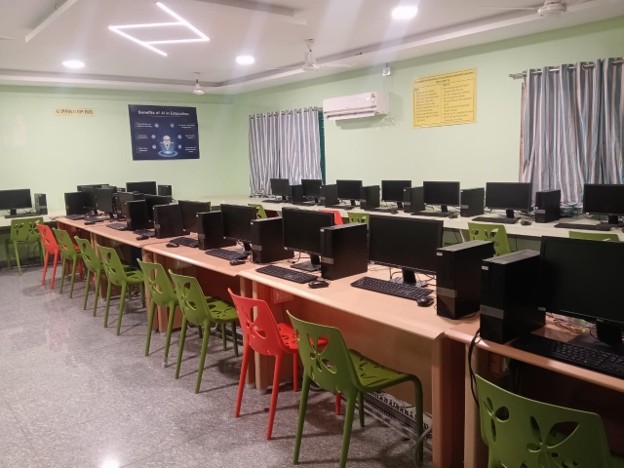
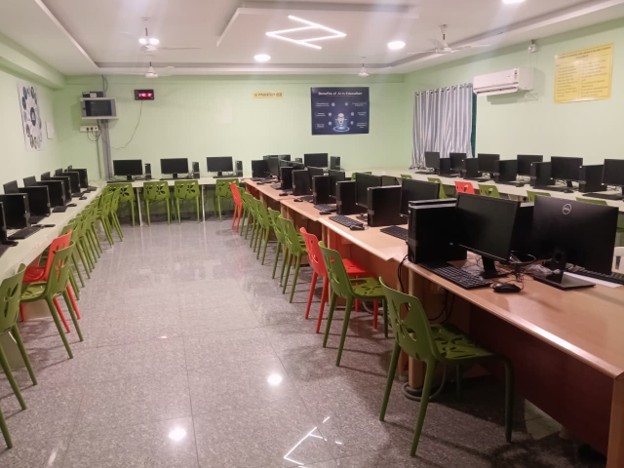
The department provides well-equipped computer laboratory facilities to support practical learning, programming, artificial intelligence, machine learning, data analysis and technology-oriented academic activities.

40 Total Computers
40 Internet Connected Systems
90 Mb/s Internet Speed
System Configuration

Computer Systems

System 01

Dell

RAM 16 GB
Processor Intel(R) Core(TM) i5-8500 CPU @ 3.00GHz (3.00GHz)
Operating System 64-bit
System 02

Lenovo

RAM 16 GB
Processor Intel(R) Core(TM) i5-8500T CPU @ 2.10GHz (2.11 GHz)
Operating System 64-bit

Faculty Corner

Student's Corner

Event Corner

20–21 AUG 2026
Event 02

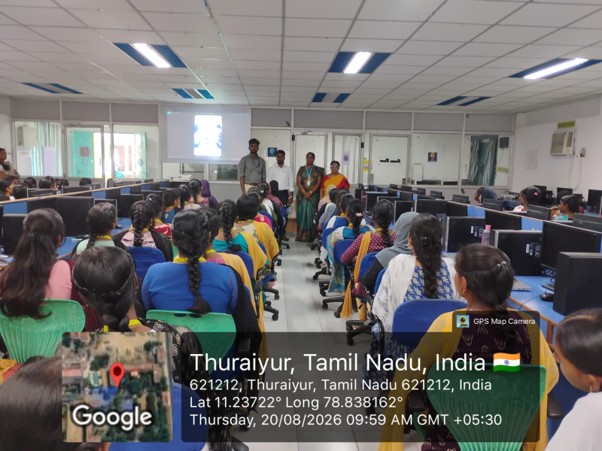
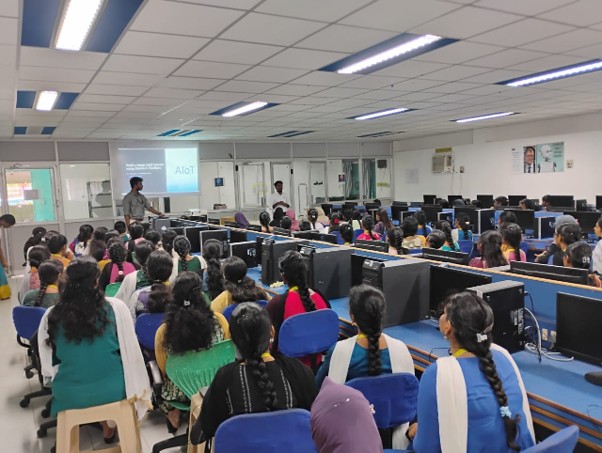
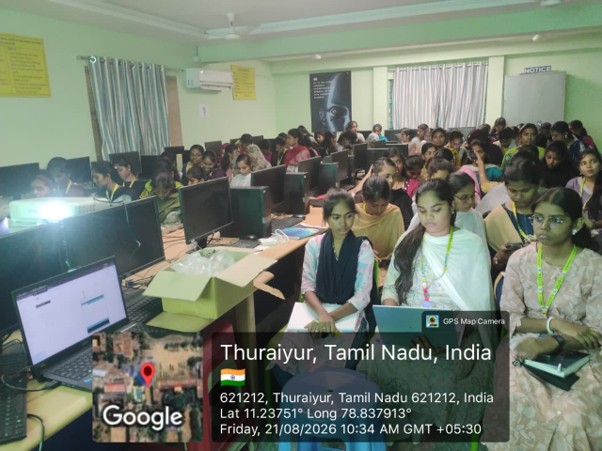
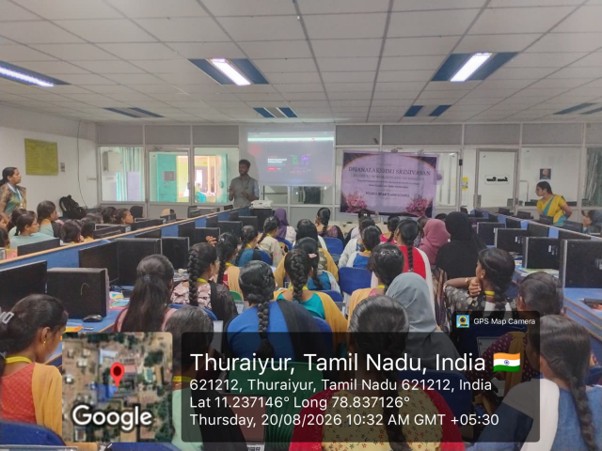
A Two Days Hands-On Workshop on “Next-Gen AIoT”

Artificial Intelligence of Things: From Sensor Data to Intelligent Cloud Dashboards

A two-day hands-on workshop designed to introduce students to Artificial Intelligence of Things (AIoT) through practical learning was organized by the Department of Artificial Intelligence & Machine Learning, School of Arts and Science, Dhanalakshmi Srinivasan Institute of Research and Technology (Deemed to be University) on 20 August 2026 (Thursday) & 21 August 2026 (Friday) at 10.00 PM in the AI Innovation Hub.

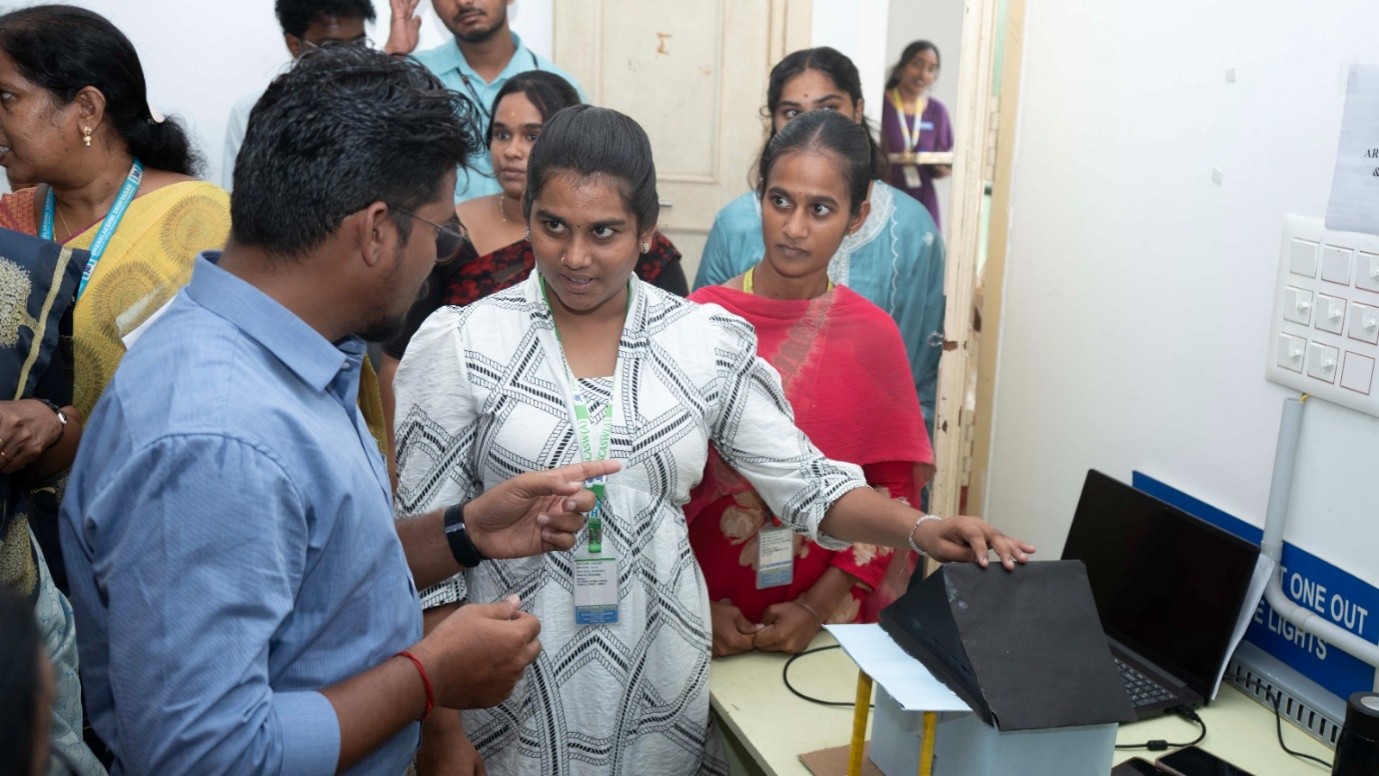
The Chief Guest Mr. R. Mugeshwaran, Founder at Kiwistron inaugurated Robotics Club and delivered a keynote address. Participants explored sensor data collection, IoT devices, AI-based data processing, cloud connectivity, and intelligent dashboards through hands-on activities.

Chief Guest Mr. R. Mugeshwaran
Venue AI Innovation Hub
06 AUG 2026
Event 01

Robotics Club Inauguration & Innovation Expo

Department of Artificial Intelligence & Machine Learning

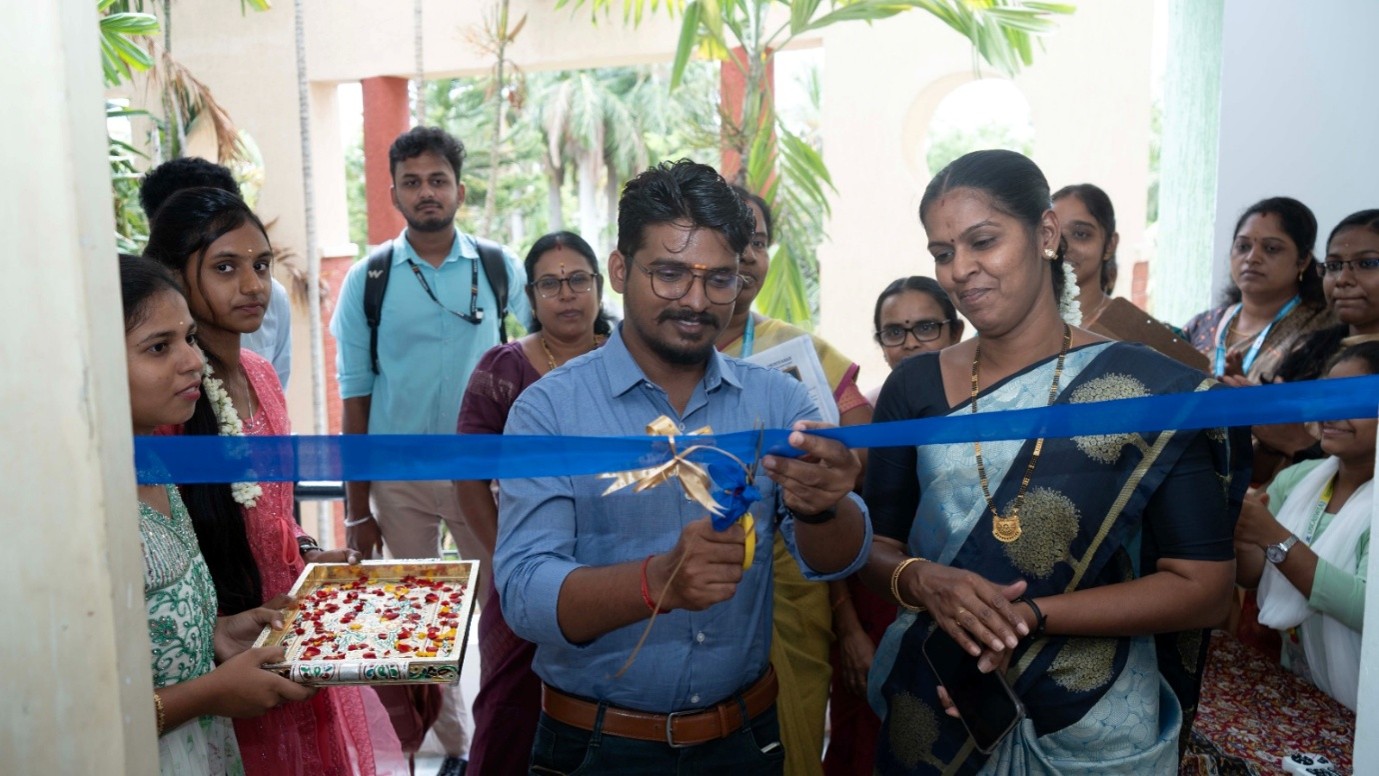
The Inauguration ceremony of Robotics Club was organized by the Department of Artificial Intelligence & Machine Learning, School of Arts and Science, Dhanalakshmi Srinivasan Institute of Research and Technology (Deemed to be University) on 6 August 2026 (Wednesday) at 10.00 PM in the College Auditorium.

The Chief Guest Mr. R. Mugeshwaran, Founder at Kiwistron inaugurated Robotics Club and delivered a motivating keynote address.

Chief Guest Mr. R. Mugeshwaran
Venue College Auditorium

Alumni Testimonial