

Ph.D. Admissions Open 2026            |            Admissions Open 2026-27      
School of Arts & Science

Biotechnology

Programme Overview

The Department of Biotechnology offers undergraduate (B.Sc.) and postgraduate (M.Sc.) programmes that build a strong foundation in molecular biology, genetics, microbiology, and applied biotechnology through rigorous coursework and hands-on laboratory training. The department is committed to nurturing scientific thinking, research aptitude, and ethical practice among students, equipping them with the technical and analytical skills needed for careers in healthcare, agriculture, and industrial biotechnology, as well as for higher studies and entrepreneurship. By combining a research-driven curriculum with industry exposure and community engagement, the department prepares graduates to address real-world biological and environmental challenges while fostering lifelong learning and global competitiveness.

Department Profile

About the Department

The Department of Biotechnology offers undergraduate (B.Sc.) and postgraduate (M.Sc.) programmes designed to build a strong foundation in the biological sciences while developing hands-on laboratory, research, and analytical skills. The curricula integrate core biology, chemistry, genetics, molecular biology, bioinformatics, and bioprocess technology with an emphasis on ethics, sustainability, and industry readiness, preparing graduates for careers in healthcare, agriculture, industrial biotechnology, and research.

Programmes Offered

Undergraduate Programme
B.Sc., Biotechnology
Postgraduate Programme
M.Sc., Biotechnology

Vision and Mission

UG Vision

Vision

To develop as a prominent center for undergraduate biotechnology education, inspiring enthusiastic young learners, innovative biotechnologists, and responsible scientists who apply biological principles to advance healthcare, agriculture, and ecological harmony through discovery and practical innovation.
UG Mission

Mission

01

To offer inclusive, flexible, and multidisciplinary undergraduate programs in biotechnology that integrate foundational biology, chemistry, genetics, and laboratory practices, building graduates with essential technical, analytical, and critical thinking skills for diverse career paths and lifelong learning.

02

To encourage foundational research and creative inquiry in microbial biotechnology, plant and animal sciences, molecular techniques, and applied biology, addressing important challenges in health, food production, and environmental protection.

03

To enhance access to quality biotechnology education for rural and underprivileged students by linking modern scientific tools with indigenous biological knowledge and traditional practices, developing relevant skills for entrepreneurial ventures and self-reliant careers.

04

To nurture ethical values, social responsibility, and global awareness through hands-on laboratory training, industry exposure, community projects, and experiential learning that connects classroom concepts with real-world biotechnological applications.

PG Vision

Vision

To attain excellence in multidisciplinary biotechnology education, research, and entrepreneurship by fostering innovation, ethical values, and societal well-being, thereby contributing to sustainable nation-building and global progress.

PG Mission

Mission

01

To deliver high-quality education through a scientifically structured, contemporary curriculum that equips students with the knowledge and skills required for global competitiveness.

02

To foster confidence, critical thinking, and analytical abilities among students, enabling them to develop innovative solutions to present and future issues of global significance.

03

To provide advanced academic and laboratory infrastructure, hands-on training, and interdisciplinary learning experiences that encourage research aptitude, innovation, and entrepreneurial mindset.

PO, PSO & PEO

PEO

Program Educational Objectives

PEO1

To provide graduates with a strong foundation in core biotechnology concepts, laboratory techniques, and basic research methods, preparing them for entry-level roles in biotechnology industries, healthcare, agriculture, and higher studies.

PEO2

To develop scientific thinking, experimental skills, and problem-solving abilities so that graduates can understand, investigate, and apply biotechnological principles to address issues in health, agriculture, and environment.

PEO3

To foster professional ethics, effective communication, and teamwork that enable graduates to work collaboratively in scientific settings and contribute responsibly to society.

PEO4

To promote lifelong learning and adaptability, empowering graduates to keep pace with developments in biotechnology and pursue further education, research, or professional opportunities in the field.

PSO

Program Specific Outcomes

PSO1

Graduates will be competent in performing basic molecular biology techniques, microbial culture methods, genetic engineering fundamentals, and biochemical assays to support applications in healthcare, agriculture, and industrial biotechnology.

PSO2

Graduates will demonstrate proficiency in laboratory safety practices, data collection, analysis, and documentation, enabling them to contribute effectively to research labs, biotech industries, and community development programs.

PO

Program Outcomes

PO1

PO1: Disciplinary Knowledge
Demonstrate comprehensive knowledge and understanding of the fundamental concepts, theories, principles, and applications in the chosen discipline and allied fields.

PO2

PO2: Critical Thinking and Problem Solving
Identify, analyze, and solve complex academic, professional, and societal problems using logical reasoning, analytical skills, and evidence-based approaches.

PO3

PO3: Research and Inquiry
Apply scientific methods, research techniques, and investigative skills to conduct studies, analyze data, interpret results, and draw meaningful conclusions.

PO4

PO4: Creativity and Innovation
Develop innovative ideas, creative solutions, and entrepreneurial approaches to address contemporary challenges in academic, professional, and social contexts.

PO5

PO5: Digital and Technological Competence
Utilize appropriate digital technologies, software tools, and information resources effectively and ethically for learning, research, communication, and problem-solving.

PO6

PO6: Environment and Sustainability
Understand environmental issues and sustainable development goals and apply this knowledge to promote ecological balance and responsible resource utilization.

PO7

PO7: Ethics and Social Responsibility
Demonstrate ethical values, integrity, inclusiveness, and social responsibility while contributing positively to society and professional environments.

PO8

PO8: Teamwork and Leadership
Work effectively as an individual and as a member or leader of diverse and multidisciplinary teams, demonstrating leadership, collaboration, and interpersonal skills.

PO9

PO9: Communication Skills
Communicate effectively through oral, written, visual, and digital means with diverse audiences in academic, professional, and societal settings.

PO10

PO10: Employability and Entrepreneurship
Develop professional competencies, managerial abilities, and entrepreneurial skills required for employment, higher education, and self-employment opportunities.

PO11

PO11: Lifelong Learning
Recognize the need for continuous learning, adaptability, and self-development to meet evolving personal, professional, and societal demands in a dynamic global environment.

PEO

Program Educational Objectives

PEO1

To provide students with a strong foundation in Biotechnology and develop technical skills for careers in research, industry, and higher education.

PEO2

To nurture innovation, ethical values, and problem-solving abilities to address societal and environmental challenges through biotechnology.

PSO

Program Specific Outcomes

PSO1

Apply advanced knowledge and specialized laboratory skills in molecular biology, genetic engineering, bioinformatics, cell culture, and bioprocess technology to solve scientific and industrial problems.

PSO2

Design and undertake independent research using modern biotechnological tools to develop innovative and sustainable solutions for healthcare, agriculture, industry, and environmental applications.

PO

Program Outcomes

PO1

Acquire in-depth knowledge and understanding of advanced concepts in molecular biology, genetics, microbiology, biochemistry, immunology, bioinformatics, and other emerging areas of biotechnology.

PO2

Design, conduct, and interpret experiments using scientific methods and apply advanced laboratory techniques to address biological problems.

PO3

Analyze complex biological data, evaluate scientific evidence, and develop innovative solutions to challenges in biotechnology and allied disciplines.

PO4

Demonstrate proficiency in modern biotechnological tools, instrumentation, computational techniques, and data analysis methods.

PO5

Integrate knowledge from life sciences, chemistry, physics, mathematics, computer science, and engineering to address multidisciplinary problems.

PO6

Apply scientific knowledge to develop innovative products, processes, and entrepreneurial ventures relevant to biotechnology industries and society.

PO7

Communicate scientific findings effectively through technical reports, research publications, presentations, and interactions with diverse audiences.

PO8

Adhere to ethical principles, biosafety guidelines, intellectual property rights, and regulatory standards in research and professional practice.

PO9

Exhibit leadership qualities, collaborative skills, and professional responsibility while working independently and in multidisciplinary teams.

PO10

Apply biotechnology for environmental sustainability, healthcare, agriculture, and societal welfare, contributing to sustainable development goals.

PO11

Engage in lifelong learning, adapt to emerging technologies, and pursue careers in academia, research, industry, entrepreneurship, and global scientific communities.

Board of Studies

Board of Studies

Department of Biotechnology

Meeting No.

DSIRT/ SAS/ BoS / 2026-27/ BT/ 01

Date

24.06.2026

Time

10.30 AM

Venue

Bioinformatics Lab

External Members

BOS External Members

01

Dr. T. Annadurai, PhD

Scientist-D/DBT RLS Fellow
Institution / Organization

Department of Pharmaceutical Technology, Anna University - BIT Campus, Tiruchirappalli.

Status

External Expert

02

Dr. D. Gowthaman, PhD

Senior Professor
Institution / Organization

School of Chemical and Biotechnology, SASTRA University, Thanjavur.

Status

External Expert

Curriculum and Syllabus

UG Curriculum & Syllabus

B.Sc. Biotechnology

Curriculum and syllabus document for the undergraduate programme in Biotechnology.

View PDF
PG Curriculum & Syllabus

M.Sc. Biotechnology

Curriculum and syllabus document for the postgraduate programme in Biotechnology.

View PDF

Laboratory and Learning Resources

Department Laboratory

Department of Biotechnology

The department provides well-equipped laboratory facilities with modern equipment to support practical learning, experimentation, research, biotechnology applications, and technology-oriented academic activities.

Laboratory Equipment

Details of Equipments

S. No Details of Equipments Specification Quantity
01 10.0 KVA DSP based UPS I/P 1 phase, O/P 1 Phase, DCV 180 V - 1
02 Acrylamide Gel Electrophoresis Apparatus BIOTECK MAKE 15
03 Agarose Gel Electrophoresis Apparatus BIOTECK MAKE 15
04 Angle Head 12x15 ml REMI 1
05 Angle Head 12x15ml R-44 R244 1
06 Angle Head 24x15 ml RM1242 1
07 Autoclave 22x4 cms IN LAB 1
08 Automated Plate Reader MAKE GLAXO 1
09 Binocular Microscope ALMICRO MAKE 1
10 BR 1100 type ape ups - -
11 Biological Safety Cabinet – Type II KLEANZONE MAKE 1
12 Co2 Incubator - 1
13 Culture Rack with timer - 1
14 Colony counter 3 Digit DEEP VISION 1
15 Colony counter-4digits - -
16 Cyclomixer REMI 1
17 Digital LED PH Meter KLICO MAKE 2
18 Digital pH meter with electrode SYSTRONICS 1
19 Digital Spectrophotometer SYSTRONICS TYPE-104 1
20 Distillation Unit BOROSIL 1
21 Double Distillation Unit BOROSIL 1
22 Electro transfer 0-200V 12-04 1
23 Electronic Balance Digital-0.01mg WENSAR MAKE 1
24 Electronic Orbital Shaker ORBITEK-LJT 1
25 Gel Documentation Unit BANDEL IN GERMAN MAKE 1
26 Heating Mantle (1000ml) AGAPPE MAKE 1
27 Hi-Air Sampler - 1
28 Hot Air Oven 35x35x35 TELECO 1
29 Hot Air Oven 45x45x45 - 1
30 Hot Plate Round GUNA MAKE 1
31 Hot plate round 1500 w - 1
32 Incubator TEMPO 1
33 Incubator 45x45x45 - 1
34 Insitu Sterilizable Fermenter -3L - 1
35 Inverted Phase Contrast Microscope - 1
36 Laminar Air Flow 4x2x2 - 1
37 Laminar Air Flow Chamber ATLANTIS MAKE 1
38 Laminar air flow chamber CLEANAIR MAKE 1
39 Laminar Air Flow Chamber [Small] CLEANAIR MAKE 1
40 Magnetic Stirrer 250ml BAMS686 1
41 Magnetic Stirrer 1LIT REMI 2
42 Magnetic Stirrer 500ml REMI 1
43 Medical Microscope WESWOX MAKE 3
44 Membrane Filter -250ml - 1
45 Micro centrifuge [Fixed Rotor] MC-2 1
46 Microwave Oven LG 1
47 Mini Model Gel Unit – 8x7cm 08-01 1
48 Monocular Microscope HB 6
49 Oil Immersion lens for Students Microscope - 6
50 Orbital Shaking Incubator REMI 1
51 Photoelectric Colorimeter SYSTRONICS 1
52 Platform Rocker GENE 1 1
53 Portable Autoclave - 1
54 Refrigerated High Speed Centrifuge C-24 REMI 1
55 Refrigerator GODREJ 1
56 Revolutionary High Speed Centrifuge R-24 R-24 1
57 Rocker Vacuum Pump TARSONS MAKE 1
58 Sonicator BANDELIN GERMAN MAKE 1
59 Spectrophotometer 104 SYSTRONICS 1
60 Students Microscope ALMICRO 6
61 Simple compound microscope ALMICRO 6
62 Students Microscope HL-33 1
63 Tissue culture rack - 1
64 UV-Spectrophotometer TYPE 119 1
65 UV-Transilluminator T-20 1
66 Vacuum Desicator 200 mm dia TARSONS MAKE 1
67 Vortex Mixer 18-01 1

Faculty Corner

Research

Research Publications

01

Dr. K.A. Jeyanthi published a Research article titled “Identification of Bioactive Compounds and Short- Term Cytotoxicity Analysis of the Aquatic Weed Eichhornia crassipes”.

02

Dr. K. A. Jeyanthi published a research article on the “Synergistic Effects of Carica papaya Seed-Mediated Silver Nanoparticles” was published.

03

Dr. K. A. Jeyanthi published a book titled “AI- powered Digital Transformation: Bridging Computer Science and Life Sciences”.

04

Dr. T. Aishwarya published a research paper titled “Biosynthesis of Copper Oxide Nanoparticles from Martynia annua Aqueous Leaf Extract: Its Antioxidant potential and Antibacterial Activity against Selected Wound Pathogens.”

Academic Contributions

Book Chapter Publication

05

Dr. K. A. Jeyanthi and Dr. T. Aishwarya published a book chapter titled “Structural Biology in the AI Era: Accelerating Protein Folding” in the book Modern Insights in Biological Sciences.

06

Ms. Sangeeth Priya and Ms. J. J. Shaerline published a book chapter titled “Next-Generation Sequencing” in the book Modern Insights in Biological Sciences.

07

Ms. Sangeeth Priya published a book chapter titled “CRISPR-Cas9: The Genetic Scalpel Redefining Modern Biology” in the book Modern Insights in Biological Sciences.

08

Dr. K. A. Jeyanthi published a book chapter titled “Ethical, Regulatory and Clinical Implications of Artificial Intelligence in Life Sciences” in the book AI- Powered Digital Transformation: Bridging Computer Science and life Sciences.

09

Dr. K. A. Jeyanthi published a book chapter titled “Bioinformatics and Multi-Omics Data Integration” in the book AI- Powered Digital Transformation: Bridging Computer Science and life Sciences.

10

Dr. T. Aishwarya published a book chapter titled “Systems Biology and Network Medicine” in the book AI- Powered Digital Transformation: Bridging Computer Science and life Sciences.

11

Dr. T. Aishwarya published a book chapter titled “Artficial Intelligence in Agricultural Biotechnology and Environmental Biology” in the book AI- Powered Digital Transformation: Bridging Computer Science and life Sciences.

12

Ms. J. J. Shaerline published a book chapter titled “Smart Wearables and Digital biomarkers” in the book AI- Powered Digital Transformation: Bridging Computer Science and life Sciences.

13

Ms. J. J. Shaerline published a book chapter titled “Artficial Intelligence in Medical imaging and Diagnostic Pathology” in the book AI- Powered Digital Transformation: Bridging Computer Science and life Sciences.

14

Ms. Sangeeth Priya published a book chapter titled “AI in Genomics and Precision Medicine” in the book AI- Powered Digital Transformation: Bridging Computer Science and life Sciences.

15

S. Selvapriya published a book chapter titled “Computational Proteomics and Structural Biology” in the book AI- Powered Digital Transformation: Bridging Computer Science and life Sciences.

16

Affrin Shithara. A published a book chapter titled “Artificial Intelligence In Epidemiology and Public Health Surveillance” in a book AI- Powered Digital Transformation: Bridging Computer Science and life Sciences.

Professional Development

FDP Participation

17

Dr. Sudha Jeyaprakash has successfully completed Faculty Development Programme (FDP) on Innovation, Entrepreneurship and Startup Ecosystem organized by Department of Research and Development in association Institutions Innovation Council on 17th to 22nd August 2026.

18

Ms. J. J. Shaerline has successfully completed 7-day National level Faculty Development Programme on “Shaping Future Education: AI – Powered Strategies for Effective Teaching held from 13.07.2026 to 7.2026 organized by JP college of Arts and Science, Ayikudy.

19

Mrs. S. Janani has successfully completed in a three-day faculty programme on “Quality Enhancement in Higher Education Empowering Faculty for Student Success and Institutional Excellence” organized by the IQAC of Nehru Memorial College from 10.06.20206 to 12.06.2026.

20

Mrs. S. Janani has successfully Completed a three days FDP on Classroom Communication for Teaching and Mentoring conducted by ICT Academy on 10 August 2026 to 12 August 2026 at Dhanalakshmi Srinivasan Engineering College, Perambalur.

21

Dr. T. Aishwarya has successfully completed 7-day National level Faculty Development Programme on “Shaping Future Education: AI – Powered Strategies for Effective Teaching held from 13.07.2026 to 7.2026 organized by JP college of Arts and Science, Ayikudy.

Student's Corner

Students Corner

VITA FEST 2K26

Department

Department of Biotechnology

Organizing Institute

Srimad Andavan Arts and Science College, Tiruchirappalli.

Event

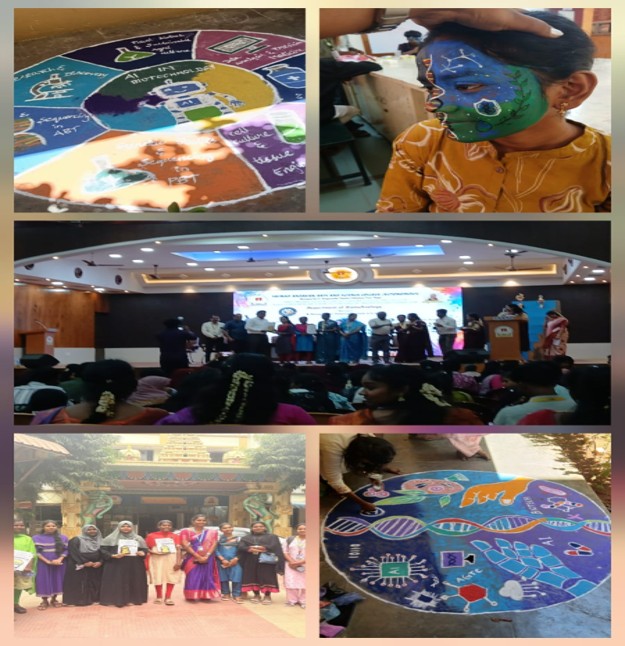
VITA FEST 2K26 intercollegiate competition

Competition

Rangoli, Facial art & E-Poster presentation

Students

II M.Sc. & III B. Sc. (15) won II nd Prize

Event Corner

07 AUG 2026
Event 01

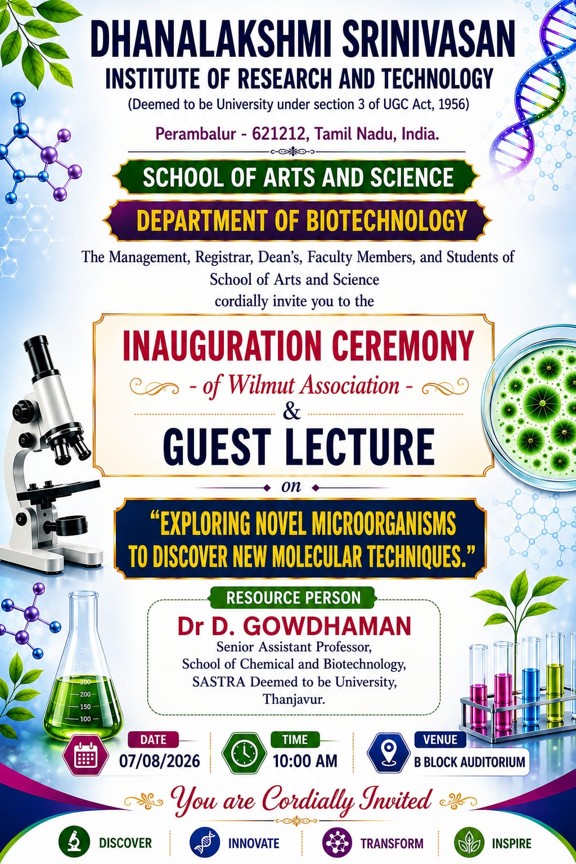
Wilmut Association Inauguration Ceremony and Guest Lecture

Department of Biotechnology

Aim

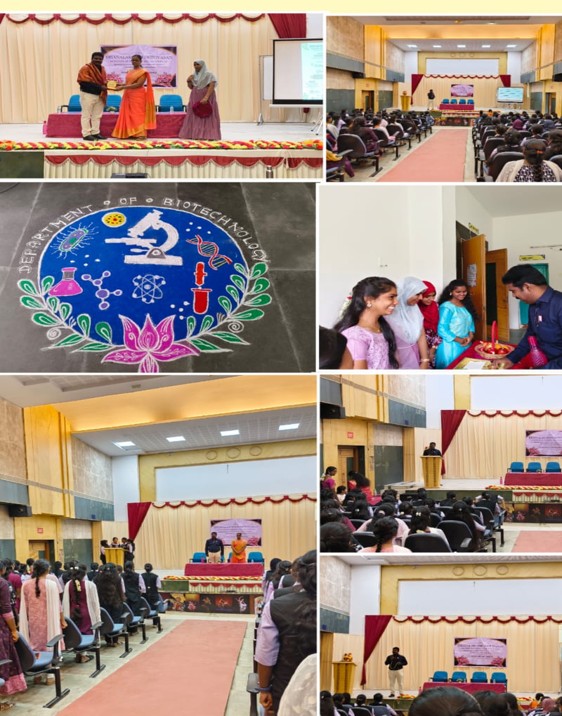
The Department of Biotechnology organized the Wilmut Association Inauguration Ceremony and Guest Lecture on “Exploring Novel Microorganisms for the Discovery of New Molecular Techniques” on 07 August 2026 at the ‘B’ Block Auditorium.

Resource Person Dr. D. Gowdhaman, Senior Assistant Professor, School of Chemical and Biotechnology, SASTRA Deemed to be University, Thanjavur.

Alumni Testimonial

Niveditha
Department of Biotechnology

Niveditha

Batch 2012 – 2015
Feedback

Mrs. Madhumol Jeevan
Department of Biotechnology

Mrs. Madhumol Jeevan

Batch 2005 – 2007
Feedback

Anusuya A
Department of Biotechnology

Anusuya A

Year of Passing 2015 – 2019
Feedback